High-Stakes Generality · umbrella · 2026-05-30

Transfer tests, walls, and review gates.

Sundog tests whether signatures that work in one domain survive substrate changes, and publishes the walls as receipts. Six lanes sit on this matrix: Navier-Stokes C1, Riemann, Yang-Mills, P-vs-NP, ARC-AGI, and Three-Body 15C. Navier-Stokes C1 is the strongest current witness — review-gated, with a two-regime Reading-2 witness. The rest are bounded-null, review-gated, or cost-held — also receipts, also not failures. None are theorem claims. This page is the asymmetric snapshot.

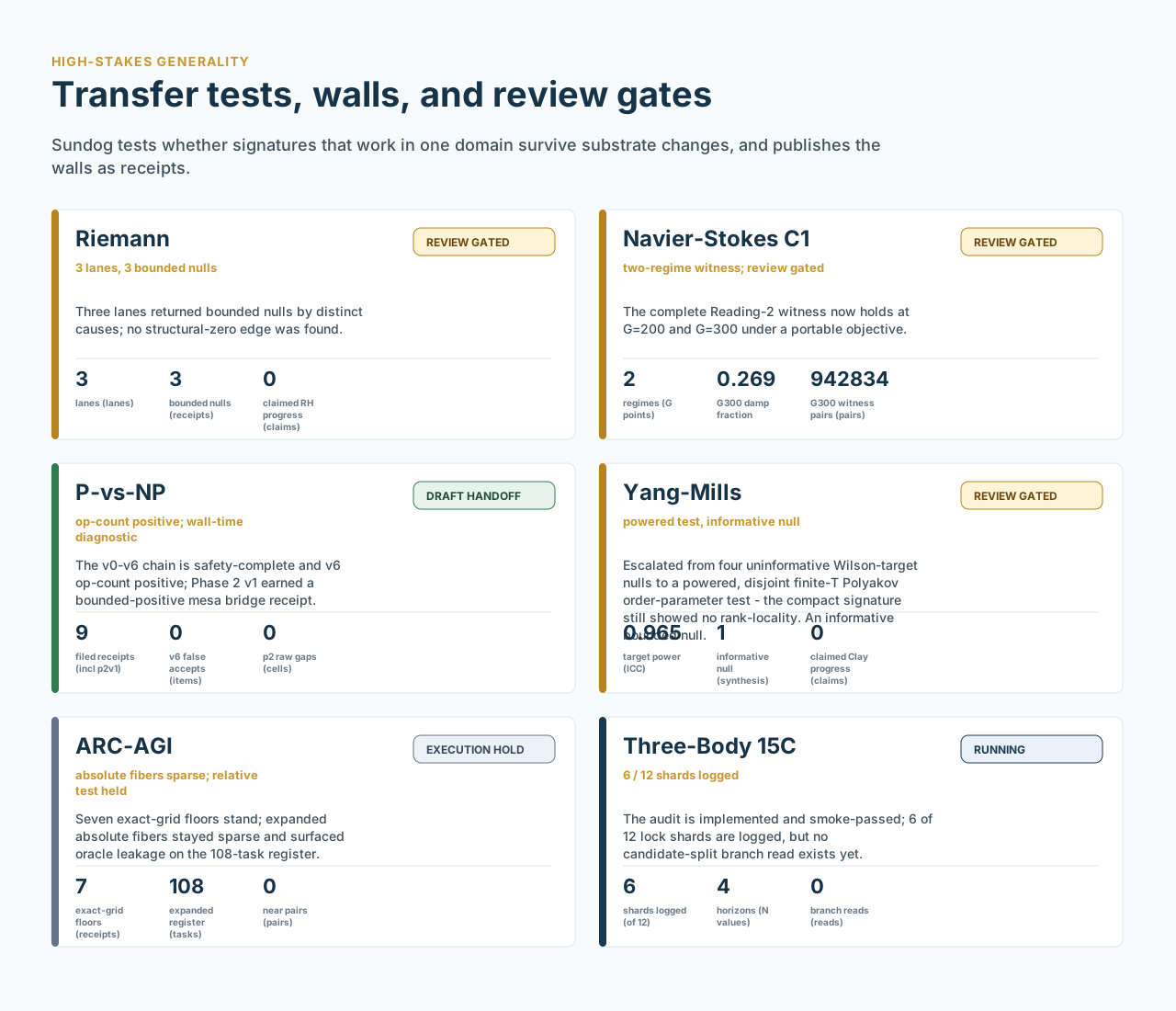
High-stakes generality status matrix: six project cards (Riemann, Navier-Stokes C1, P-vs-NP, Yang-Mills, ARC-AGI, Three-Body 15C) with review-gated, cost-hold, execution-hold, and running badges plus per-project stat readouts.
Status matrix — six lanes, current verdicts and walls. Cards click through to per-lane ledgers below.

The Lanes

Six transfer tests; each one names its wall.

Each lane is a pre-registered audit chain: constants and outcome categories registered in code and spec before any row is interpreted, so the failure modes are visible before the result is. Bounded-null results are named outcomes, not silent failures.

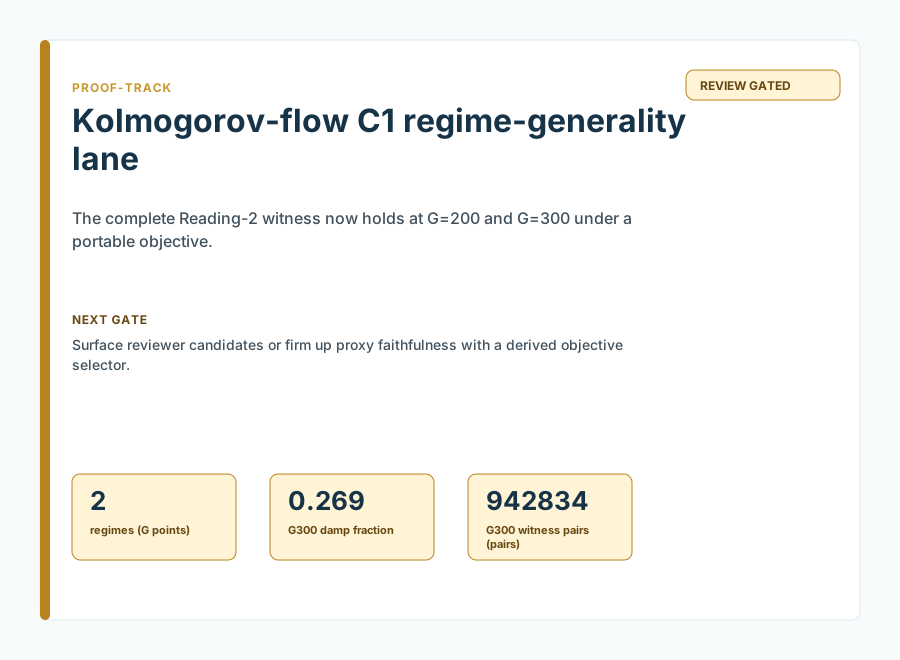
Navier-Stokes C1 generality card: review-gated, Kolmogorov-flow Reading-2 witness at G=200 and G=300 with 942,834 witness pairs.
Review gated

Navier-Stokes C1

Reading-2 witness · two Grashof regimes

Postulate-1 Reading-2 regime-2 witness now replicates at G=200 and G=300 under a portable objective. Dimension-robust (d=32 / d=18), 942,834 G=300 witness pairs, composed at matching ε_K. C1 remains UNPROMOTED until an external PDE reviewer pass closes promotion criterion (c).

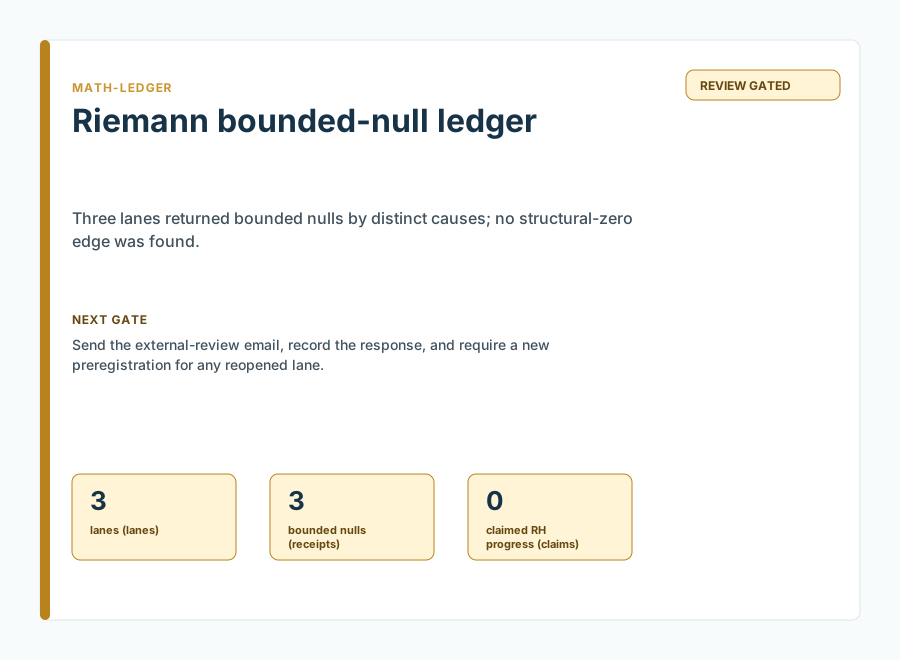
Riemann generality card: review-gated, three lanes with three bounded nulls and no structural-zero edge.
Review gated

Riemann

3 lanes, 3 bounded nulls

Three lanes returned bounded nulls by distinct substrate causes; no structural-zero edge was found in the RH-adjacent zero data. The external-review packet is filed; public surface blocked on review return. 0 claimed RH progress.

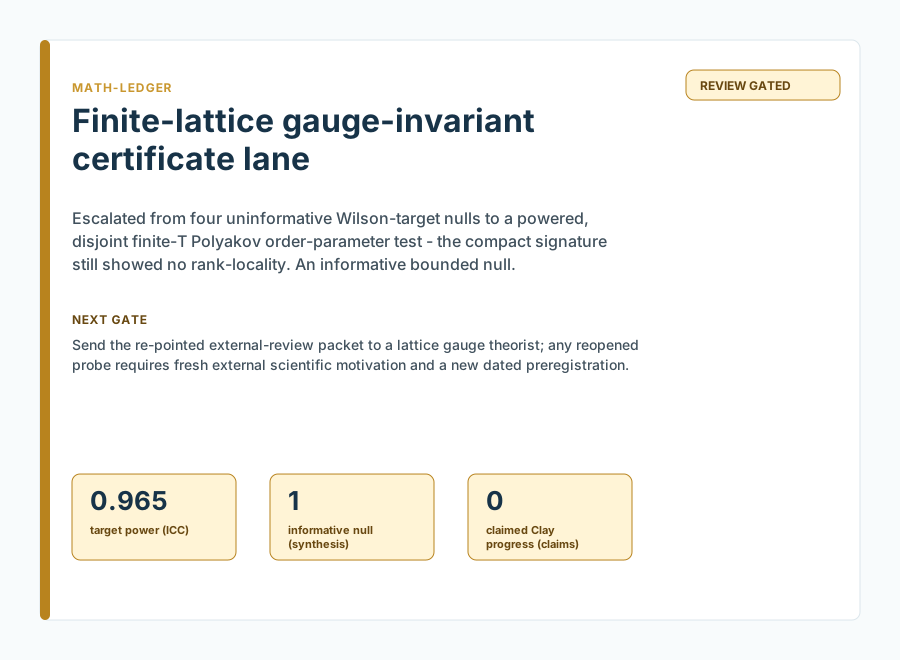
Yang-Mills generality card: review-gated; an audit-first escalation to a powered, disjoint finite-temperature Polyakov test the small-loop signature still did not separate - an informative bounded null with zero Clay-problem claims.
Review gated

Yang-Mills

powered test, informative null

An audit-first escalation: four pre-registered Wilson-target probes on SU(2) 3D 12³ landed YM-P2-NEG-A, but a follow-up audit showed those targets were not powered. So the lane escalated to a powered (split-half ICC 0.965), disjoint finite-temperature Polyakov (confinement order-parameter) test — and the compact small-loop signature still showed no rank-locality beyond controls. An informative bounded null. No mass-gap, confinement, continuum, or Clay-problem claim.

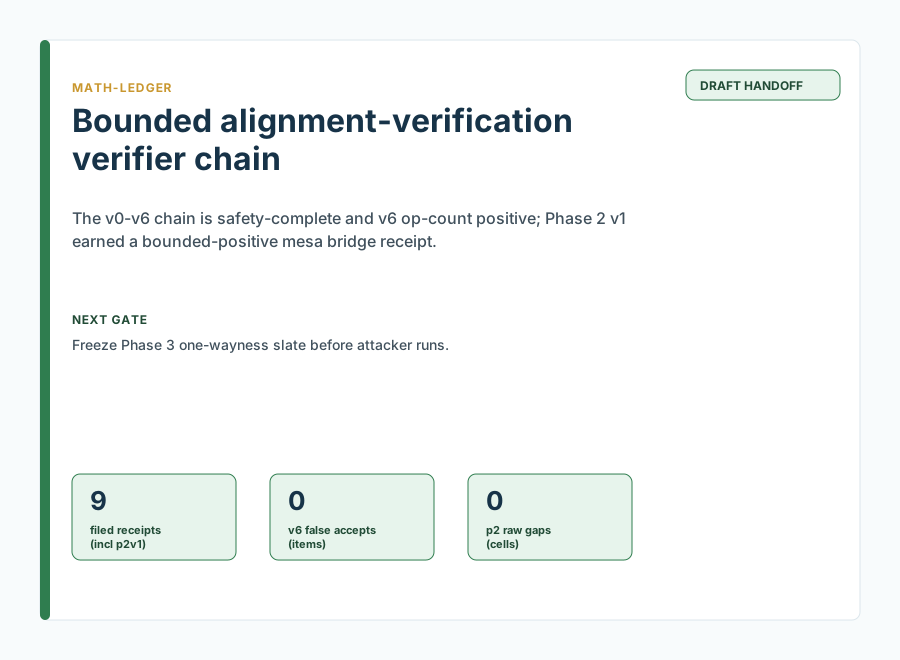
P-vs-NP generality card: safety green, cost unresolved across v0 through v5.
Cost hold

P-vs-NP

safety green; cost unresolved

The v0-v5 chain closed multiple safety holes — 0 false accepts on v5 — but v5 is still cost-unadjudicated after environment-hash drift. Two required reruns. The bounded alignment-verification version of P-vs-NP, not the full Clay problem.

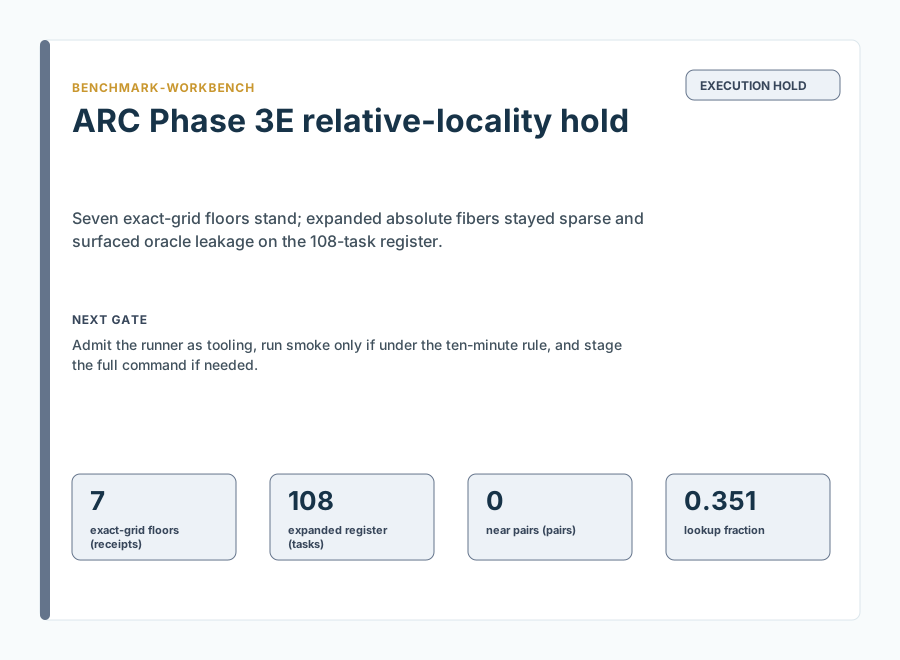
ARC-AGI generality card: Phase 3E relative-locality hold, expanded 108-task register, Branch E3 learned ranker built but compute-paused.
Execution hold

ARC-AGI

absolute fibers sparse; relative test held

Seven exact-grid floors stand; expanded absolute fibers stayed sparse and surfaced oracle leakage on the 108-task register. The relative-locality lane stays held until tooling admission, leak checks, result path, smoke fingerprint, and freeze marker are all filed together.

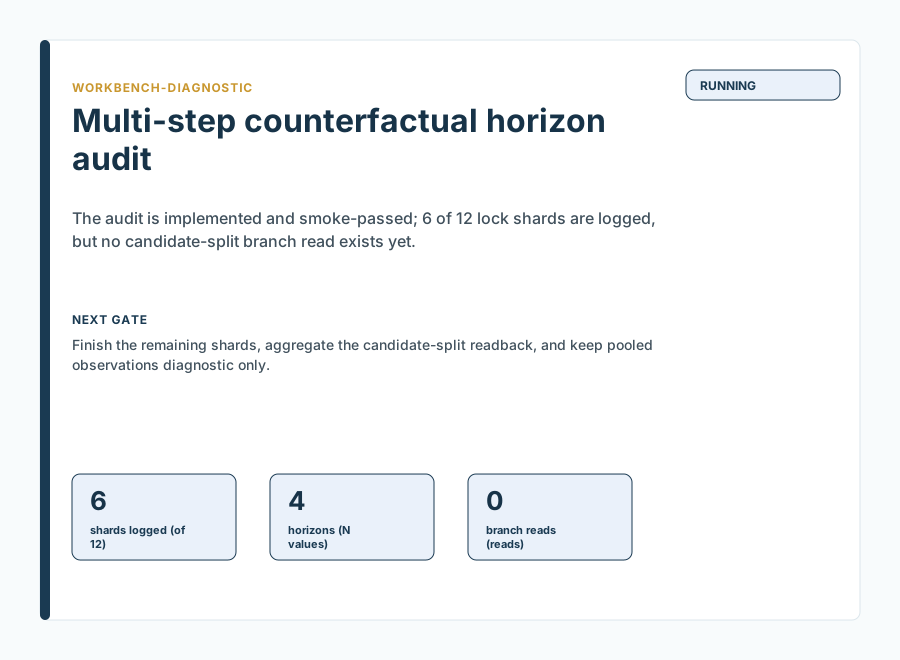
Three-Body Phase 15C generality card: running multi-step counterfactual horizon audit with 6 of 12 shards logged.
Running

Three-Body Phase 15C

6 / 12 shards logged

The Phase 15C counterfactual horizon audit is implemented and smoke-passed; 6 of 12 lock shards are logged, but no candidate-split branch read exists yet. The Three-Body roadmap is the sibling source for Navier-Stokes Reading-2 — the same audit-chain discipline applied to a different substrate.

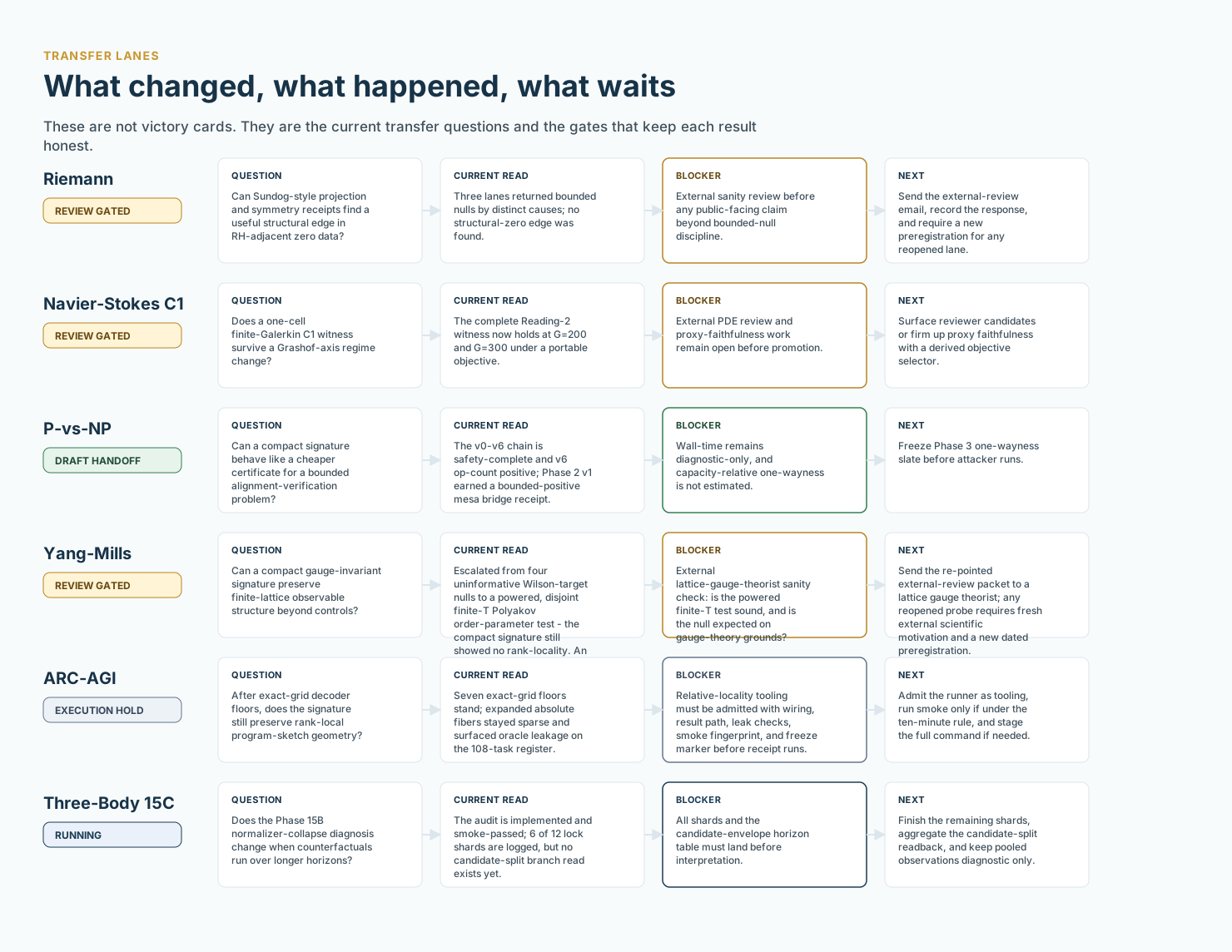
Transfer-lanes diagram: per-project question, current read, and blocker columns. These are not victory cards; they are the current transfer questions and the gates that keep each result honest.
Transfer lanes — what changed, what happened, what waits. The blocker column is where the discipline lives.

Where This Sits

From a first equation to transfer tests.

The site now has two public math layers. h-of-x is the narrow geometry handle: write the inverse, name its eligibility boundary, and keep the failure case visible. High-Stakes Generality is the same discipline after the substrates get harder: ask whether a signature survives a regime change, publish the bounded nulls, and keep review gates attached to the claim.

Shadow Faraday is the calibration receipt for this style before the substrates get hard: a known classical-EM identity, a local gauge-invariant shadow, a Branch A zero-out, and named quarantines at the boundary. It is not counted as a high-stakes lane because the mathematics is already understood; it is the clean pattern that makes the Navier-Stokes, Yang-Mills, Riemann, and P-vs-NP pages legible.

Use Geometry for the visual/math shelf, Alignment for same-information comparator language, Legend for vocabulary, and Repo Map when you want the whole public route in one place.

The per-lane verdicts above are catalogued by failure mode — marginal, numerical wall, bounded null, vacuous, cost-bounded, convergence-to-null, conditional, deflationary — in the cross-substrate failure map, the precise companion that names why each lane sits where it does and bidirectionally links back to every ledger on this page.

Claim Boundary

Not a Clay-problem claim.

None of these six lanes claims progress on a Clay Millennium problem. Navier-Stokes C1 is a Kolmogorov-flow cell witness; Yang-Mills is a finite-lattice lane whose strongest test is an informative bounded null with no mass-gap claim; Riemann returned bounded nulls.

Not a theorem-claims page.

Receipts, witnesses, and bounded nulls are the artifact class. Reopening any lane to a theorem-facing claim requires the corresponding ledger's promotion criteria to all close.

Not symmetric weight.

Navier-Stokes C1 has its own page (/navierstokes) because it is the strongest current lane. The other five are honest cards on this matrix. Symmetric layout when the underlying results are asymmetric would be a credibility loss.

Not a launch surface for the underlying ledgers.

Each per-lane ledger remains the source of truth. This umbrella is the discipline-frame; the load-bearing claims live in docs/SUNDOG_V_*.md.

Inspection Trail